central/models/event_registry.py
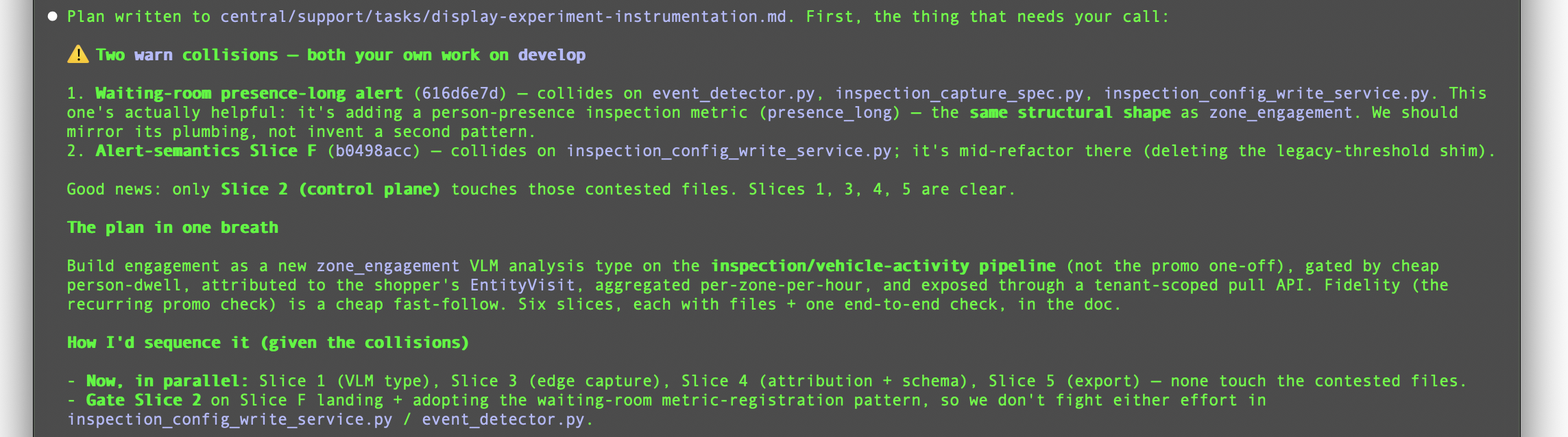
“Before I go further—the intent registry flagged a warn-level overlap I need to raise with you first.”
Cross-provider coordination for coding agents
I wanted to run multiple coding agents without them stepping on each other. FlightPlan gives each agent the same preflight picture, lets them coordinate while plans are still cheap to change, and leaves behind what changed and why for whichever agent comes next.
uvx getflightplan install
central/models/event_registry.py
“Before I go further—the intent registry flagged a warn-level overlap I need to raise with you first.”
Real session, typeset for clarity. Exact IDs preserved.
Across sessions. Across people. Across providers. Across time. One shared picture.
What FlightPlan sees
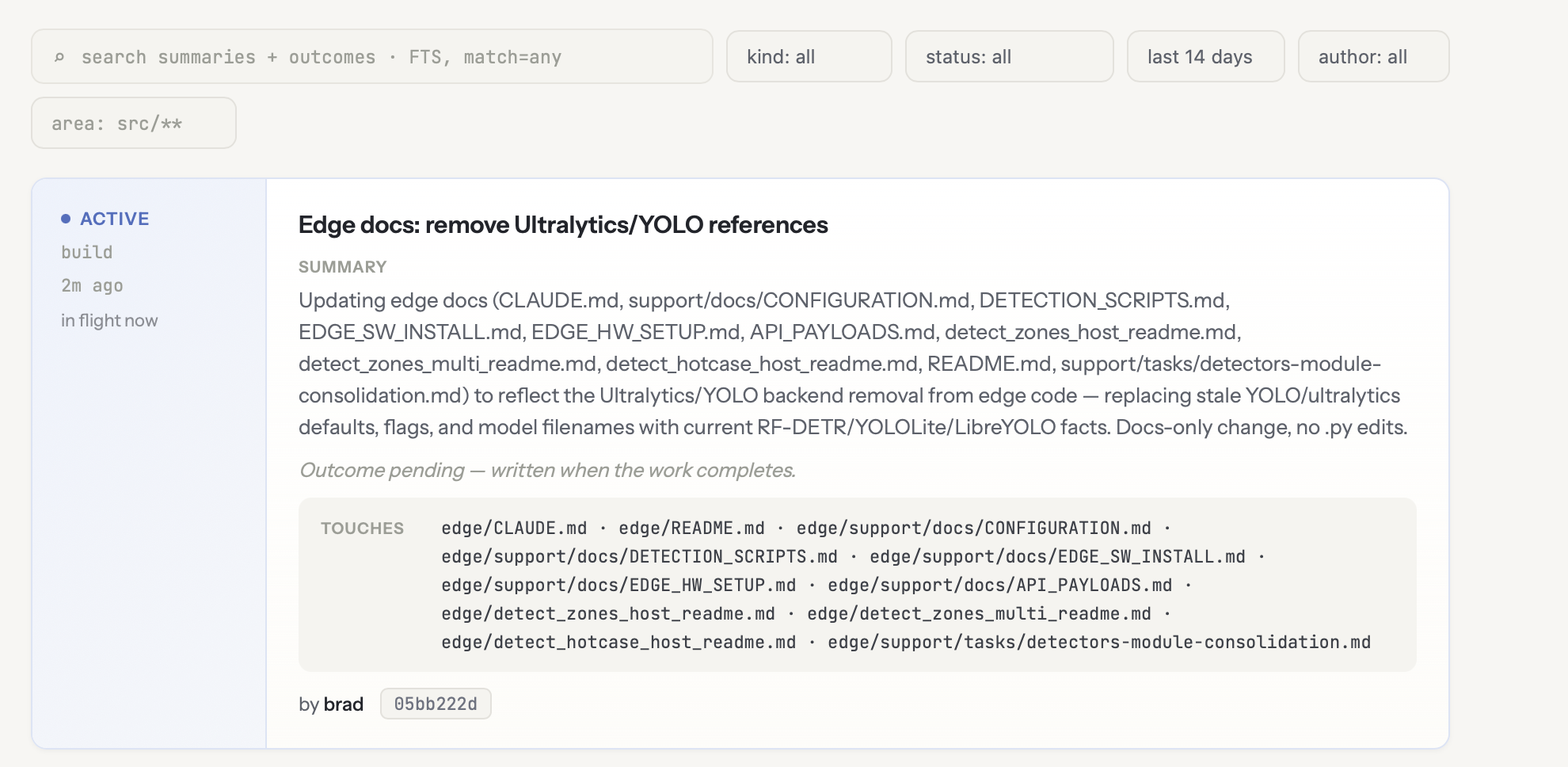
The receipt above is one real moment. The flight board is the continuing system view: what each agent filed, where plans overlap, and where work can proceed safely. It advises; it never locks.
event_detector.py · event_registry.py
inspection_config_write_service.py · event_registry.py
api/exports/* · schemas/engagement.py
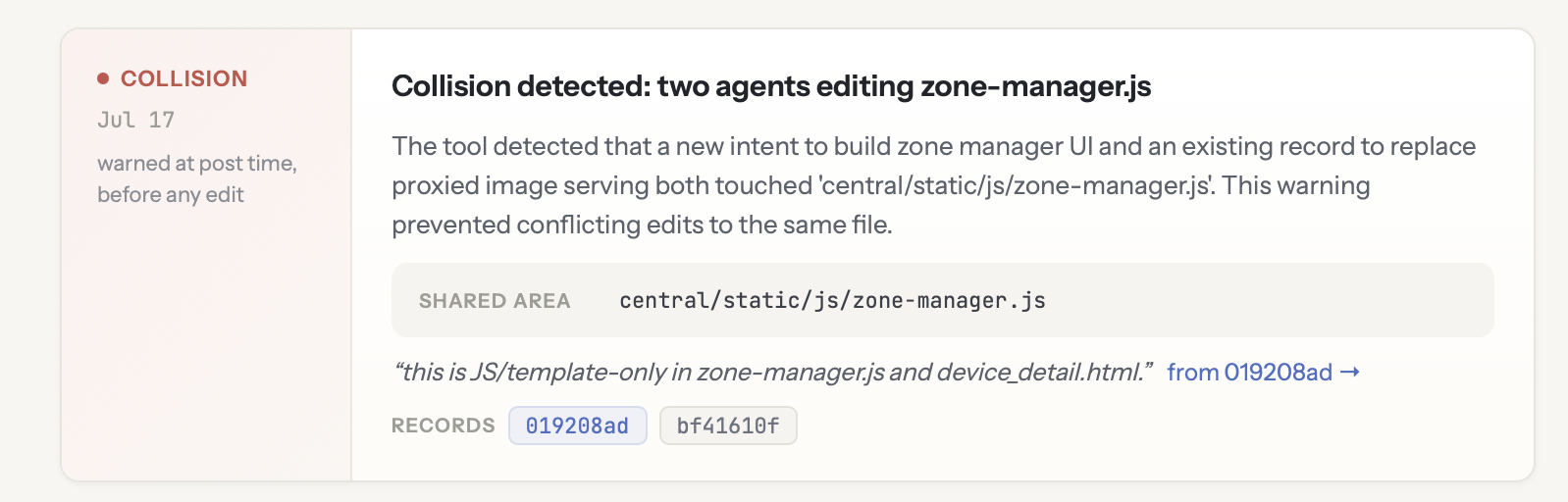
Real collision, shown in the broader coordination view.
Exhaust, not effort
No board to groom. No tags to keep current. No status ritual. FlightPlan attaches coordination to the work agents already do.
The agent declares what it is about to touch before the first edit.
Active and uncommitted work surfaces while redirection is still cheap.
The agent narrows, sequences, or continues safely. FlightPlan never locks.
What changed, what failed, and why remain for whichever agent comes next.
Install it once per repo. From there, agents maintain the shared picture through calls made as part of their normal work.
Flight log · real sessions
These are real FlightPlan moments from coding sessions—not a staged workflow or an invented dashboard.
Surfaced at post time, while both plans were still cheap to change.
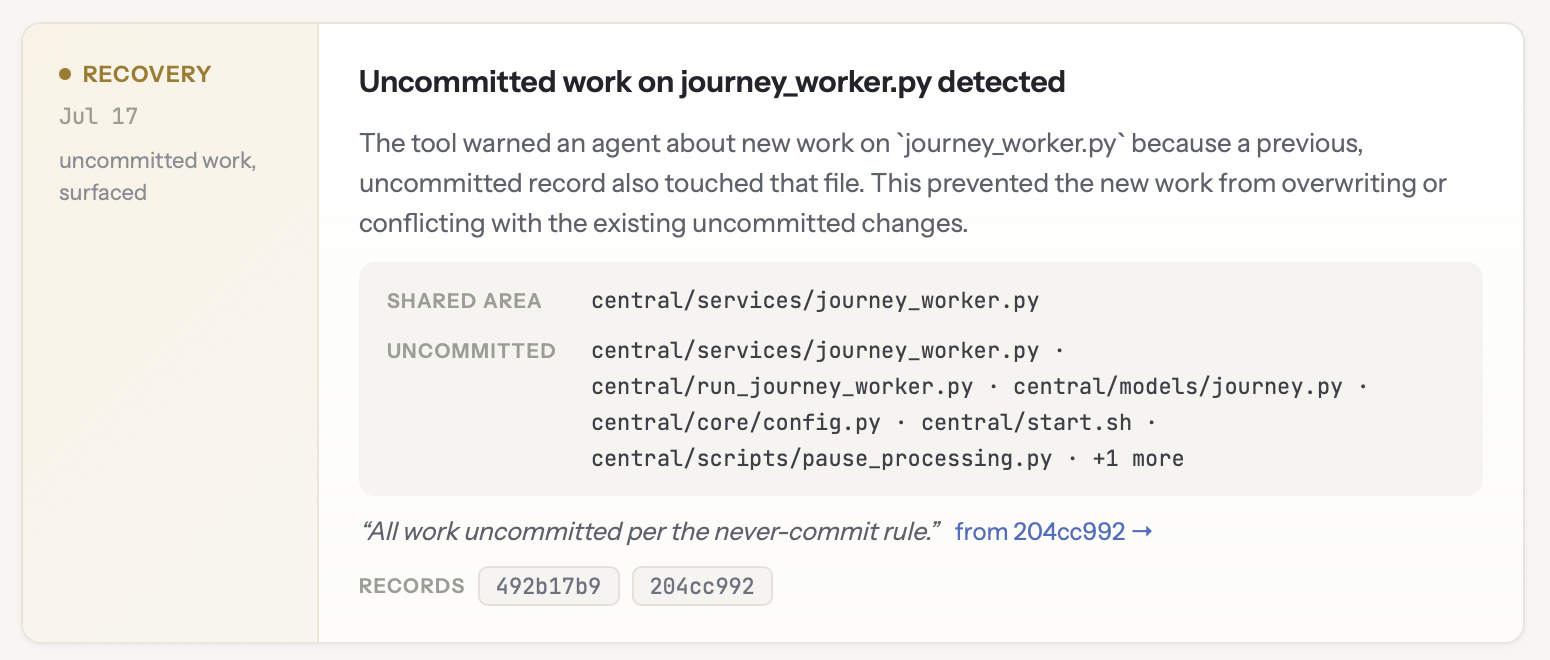
An uncommitted change surfaced before another agent overwrote it.
“Four slices can proceed now. Gate one.”
The warning preserved velocity instead of blocking the work.
Durable context · compounding value
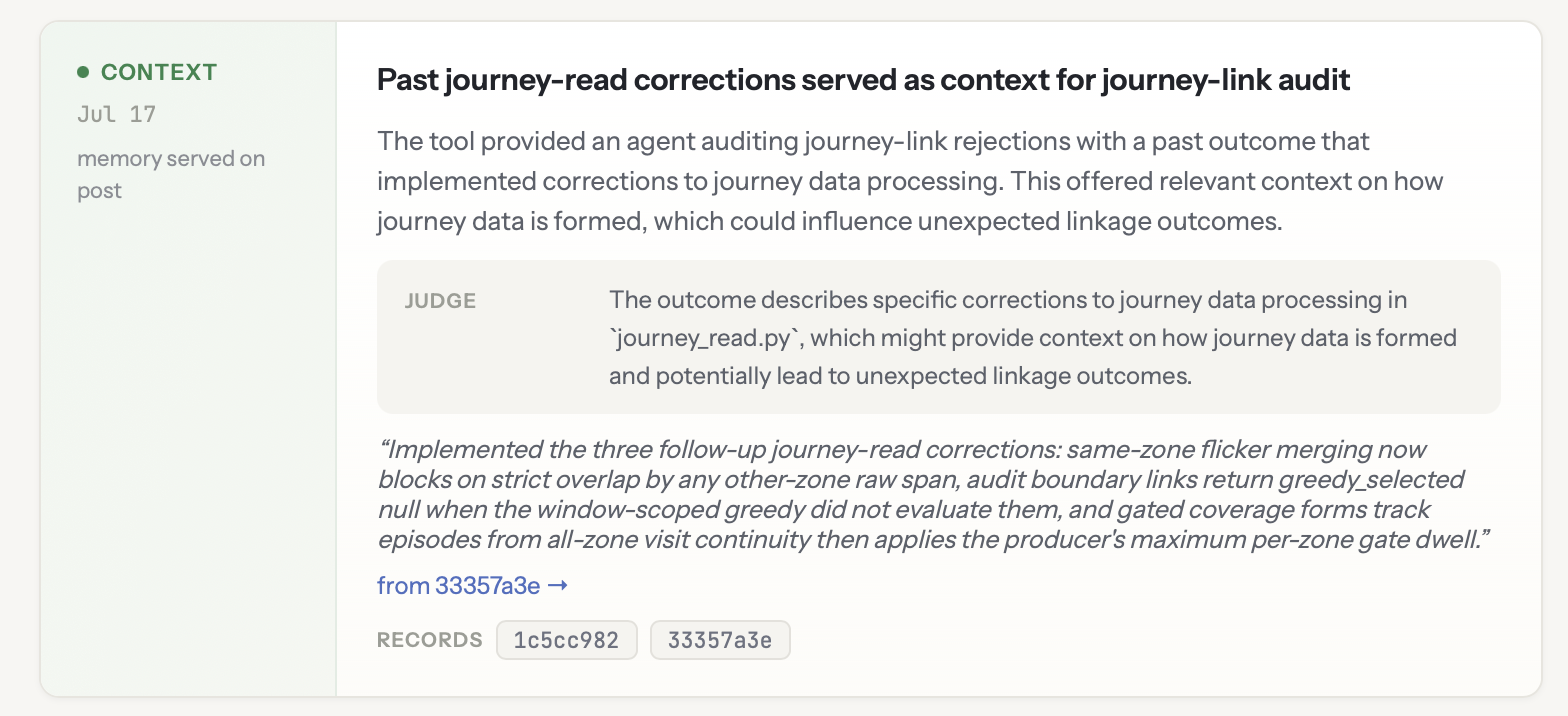
A later agent could see that LangChain was removed in Git. FlightPlan supplied the missing why: the only known consumer had been audited, dead imports came from an older removal, and generated metadata was deliberately left for the next build.
The record belongs to you—not one session, provider, runtime, model, or memory file.
The product
Read-only views make the work and FlightPlan's value visible—without turning people into productivity numbers.
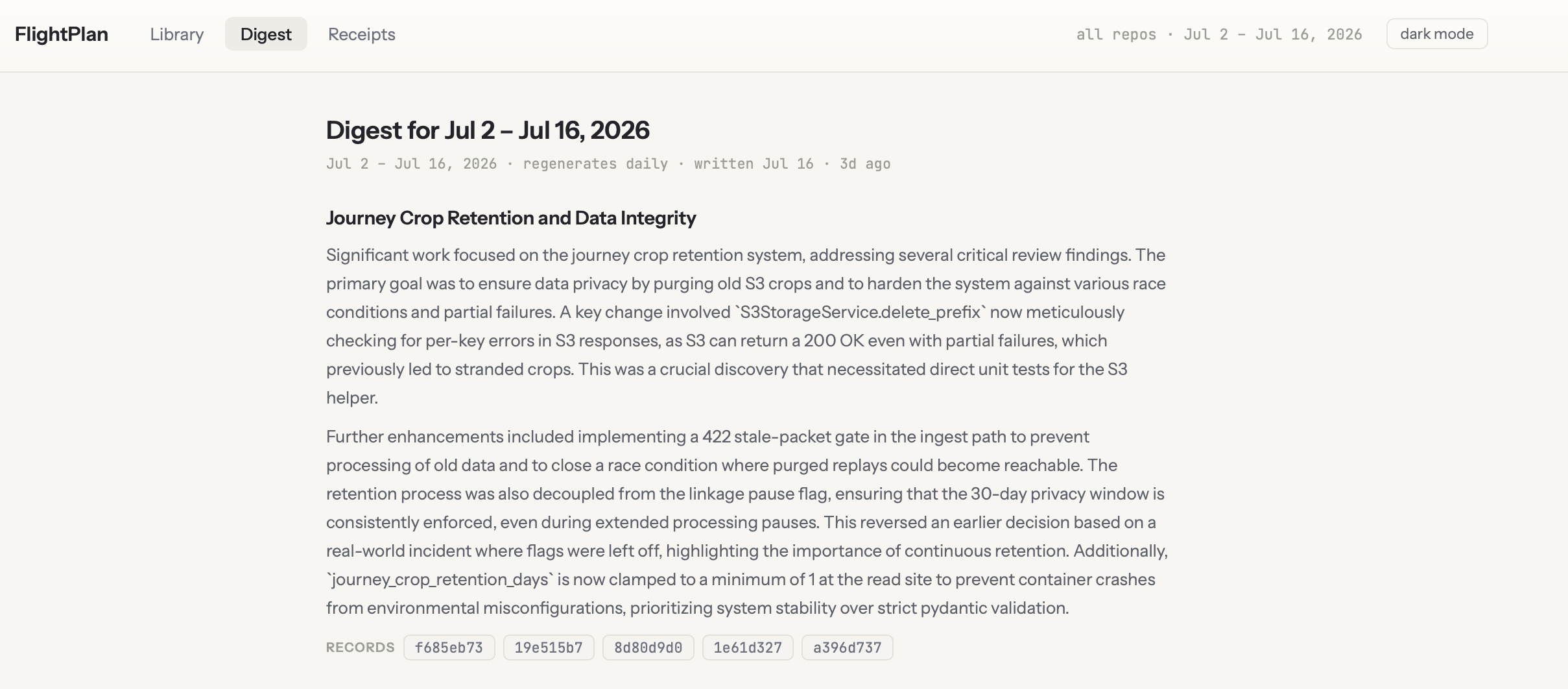
A week away, in prose.
What's in flight and what happened.
Proof that FlightPlan helped.
What leaves your machine
Your agent files a plan. That plan is what goes to the registry—the prose it wrote, and the paths it expects to touch. Nothing reads your files to build it.
Be clear-eyed about the prose: your agent writes it, so it can name files, functions, and design choices. That description is the product—it is what the next agent reads.
Never sent
.env.{
"repo": "raveneye",
"kind": "build",
"branch": "develop",
"session": "616d6e7dc41f",
"summary": "Add the waiting-room presence_long
metric and category.",
"touches": [
"central/models/event_registry.py",
"central/services/event_detector.py"
]
}
The client is open source. Read it, or read the data-flow doc, which covers login and registration too.
File your first plan
Connect through MCP so Claude Code, Codex, and MCP-capable agent runtimes can share one coordination record—then let that record maintain itself. The first time on a machine, a browser login connects your account.
More commands · run with uvx getflightplan …
install --agent both Codex too, not just Claude Codelogin --headless no browser on this machineregister link this repo to the registry laterlogout remove this machine's credentialuninstall remove everything install wroteInstall is per repo. Login is once per machine.